The Waterfront View Is Not the Whole Waterfront
A waterfront view is only part of the public edge. Compare access, routes and ground-level uses to choose a shoreline that works beyond the photograph.
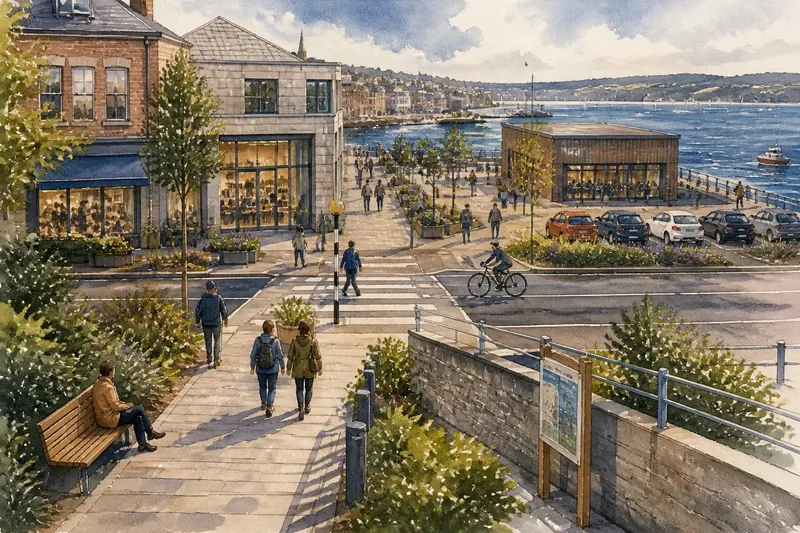
A waterfront view can be impressive while the street behind it stays cut off from the water. Waterfront access is shaped not only by paths and entrances, but by what happens between the neighbourhood and the shore: the ground floor, the crossing, the edge of a building and the choices made about public space.
Look beyond the shoreline
Some waterfronts meet the city through active ground floors: a café, a community room, a fish shop or a public building with doors onto the street. Others present a blank wall, a car park or a service yard. Those edges affect whether the water feels woven into ordinary city life or set apart as a view to visit occasionally.
This is a different question from whether a promenade is pleasant to walk. A route may be clear and comfortable yet still leave a hard boundary between the shore and the streets behind it. Look at the whole approach: what draws people towards the water, what they encounter along the way, and whether the waterfront has a useful relationship with its neighbours.
Ground floors matter
Doors and windows can make a street feel watched over and connected. A public library facing a quay, for instance, can give the edge a civic purpose even when nobody is sitting beside the water. A long stretch of closed frontage can have the opposite effect, making the shore seem distant despite its physical closeness.
Not every building needs to open directly onto the water. A working building may need secure walls, and a home needs privacy. The useful question is whether the wider block offers some active or public-facing edges, rather than asking every frontage to serve the same role.
Crossings and thresholds
Roads, rail lines, car parks and steep changes in level can separate a waterfront from the district around it. A well-placed crossing or a visible stair can help; a route that sends people on a long detour can make a nearby shore feel out of reach. Notice where people naturally approach, not just where a plan marks an entrance.
Thresholds also shape the welcome. A small forecourt, a clear sign at a junction or a public bench by an entrance can make the transition easier to read. Think of it like a front door: the room beyond may be inviting, but a confusing threshold can still make someone hesitate.
Neighbourhood connections
A waterfront becomes part of daily life when it connects with places people already use. A market street, a bus stop, a school or a public square can give residents a reason to pass the water on an ordinary day. That connection may matter more than a dramatic vista reserved for special outings.
Picture a neighbourhood where a small public square sits behind a waterfront car park. Imagine the city adds a marked pedestrian crossing, a planted path through the car park and a public entrance to a local reading room facing the water. The expected observable result is a clearer walking connection and a place with activity beside the shore; the trade-off is that some parking space would be given over to public access.
Questions about waterfront access?
What makes a waterfront feel connected to its neighbourhood?
Look for direct links to ordinary destinations, such as a high street, bus stop or public square. Active ground floors and clear crossings can make the shore feel like part of the district rather than a separate attraction.
Can a waterfront work without shops and cafés?
Yes. A public library, community space, market, school or well-used civic building can also bring everyday activity to the edge. What matters is that the waterfront has a relationship with surrounding streets, not that it depends on retail.
How can I tell if a waterfront entrance is easy to find?
Approach from a nearby public street and look for a visible, lawful route without relying on a gap in a fence or a service entrance. If the path is unclear, follow local signs and do not enter restricted property.
What can interrupt access between a city and the shore?
Busy roads, rail lines, parking areas, steep slopes and blank building fronts can all create a barrier. Their effect depends on the route available around or through them, so notice the actual connection rather than judging distance on a map.
Compare the approach
For a grounded comparison, start at a nearby public street and note what lies between it and the water. Use each observation to decide what matters for your visit:
- Check whether the entrance is visible from the street; if it is, follow the signed public route, and if it is not, look for another clearly marked entrance.
- Check whether a road or car park interrupts the approach; if a safe crossing is available, use it, and if not, choose a different public access point.
- Check whether buildings along the way have public-facing doors or windows; if they do, expect more street activity, and if they do not, consider whether that quieter edge suits your visit.
- Check whether the route connects to a bus stop, market street or square; if it does, it may fit an everyday trip, and if it does not, plan to treat the shore as a separate destination.
- Check whether the path has a usable surface and places to rest; if both suit your needs, continue, and if either does not, seek a route with more suitable access.
- Check whether signs clearly distinguish public space from private or working areas; if they do, remain on the indicated route, and if they do not, keep to clearly public ground and ask the relevant site operator for guidance.
These details help explain why two waterfronts with similar views can feel very different. Waterfront access depends on the connection between shore, street and buildings, not simply on how close the water appears.
When you compare a city edge, follow the approach from a familiar street and notice what the waterfront gives back to the neighbourhood. A door that opens onto a civic space, a crossing that continues a daily walking route or a useful place to pause can turn a distant-looking shore into part of the city’s ordinary fabric.