Promenade or Harbour Walk: Two Ways to Meet the Water
Promenade or harbour walk? Compare their pace, public character and relationship to harbour work so you can choose a waterside outing that suits your day.
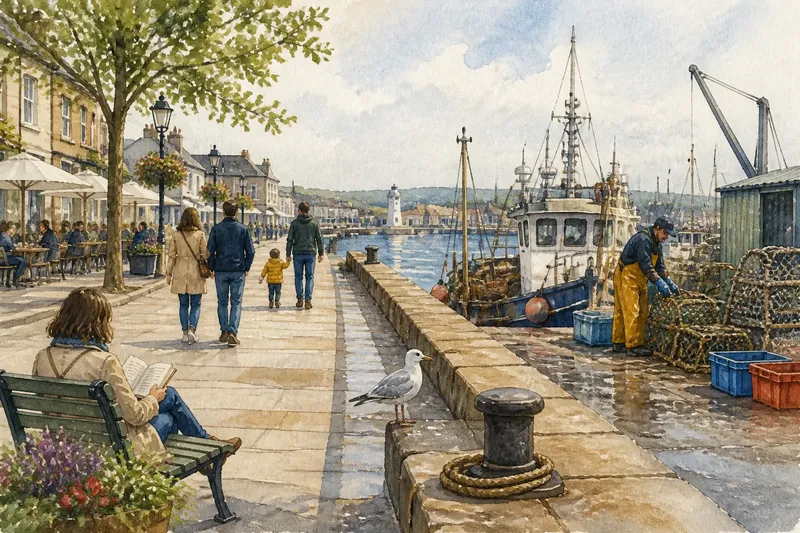
A promenade or harbour walk offers a different kind of time by the water. A promenade is shaped for public enjoyment; a harbour walk follows an edge where vessels and waterfront work need room. That difference can matter more than the view: one invites an unhurried pause, while the other brings you close to a working place.
The two can overlap. A promenade may pass a ferry landing, and a public harbour path may include spots to sit. Rather than treating the names as firm promises, consider how each route is used and what you want from the visit.
Promenade character
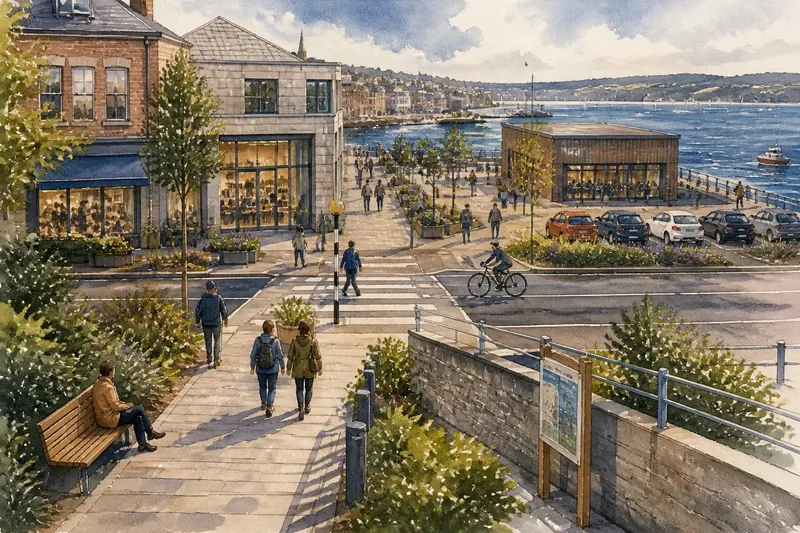
A promenade is a waterside route designed mainly for public movement and leisure. Its paving, seating and connections to squares or streets make it easy to stroll, stop for a chat or settle with a drink. The water is part of the setting, but the route itself is also a destination.
You might pass a family taking a short walk, someone reading on a low wall or friends meeting before heading into town. These everyday activities shape the atmosphere. A promenade usually makes lingering feel natural rather than incidental.
It can still sit alongside active waterfront uses. A ferry landing or service road may be close by, so the word describes the route’s public character, not an assurance of uninterrupted quiet.
Harbour walk character
A harbour walk follows the edge of a port, marina or other harbour. It may run along a quay or connect public places beside areas used by crews and waterfront businesses. Its defining feature is proximity to harbour work, not a particular style of paving or a promise of access to every part of the shore.
There may be boats secured at bollards, lobster pots stored near a shed or a ramp used to move equipment. These details are part of a working landscape, not scenery arranged for visitors. The route may feel open in one stretch and more purposeful in another.
Some harbour walks have places to pause; others prioritise circulation and access. If a vessel is being handled or a service area is in use, visitors may need to wait or follow a different public route. That changing rhythm is part of walking beside an active harbour.
Choose for your outing
A promenade tends to suit a visit built around an easy stroll, conversation or an unhurried stop by the water. A harbour walk suits someone curious about boats and the everyday activity around them, provided they are comfortable with a route that may change character.
Say you have an hour before meeting a friend and want a place to sit. You start at a waterfront square, where the posted map shows a public promenade beside the square and a separate signed path towards the harbour. You follow the promenade and find seating along the public route, so you keep your plan. If the map instead shows seating only beyond a section marked for harbour access, you choose the promenade for this visit and leave the harbour path for another time. The decision follows the route information, not an assumption that every quay is open.
Neither option is inherently better. A promenade can be busy, while a harbour path can be quiet; both can change with local events and harbour activity. The useful distinction is what the route is arranged to support and how much of your attention you want to give to the working edge.
Reading harbour routes
One feature alone rarely tells you what kind of route you are on. A bench can stand near a quay, and a promenade can pass a marina. Look at the combination of layout, access and activity, then use this list to decide whether the route fits your plans.
- Public-space connections: If the path links a square, park or town street, expect it to function as part of a public outing; if it ends at a controlled harbour area, stay on the signed public section instead.
- Harbour equipment: If bollards, ramps or stored gear are in use beside the path, give the work area room; if the route is clear and signed for visitors, continue without entering the equipment area.
- Access notices: If a sign marks a closed or private section, follow its public alternative; if the notice directs visitors to a staffed point, ask there before proceeding.
- Changing route layout: If a path narrows near a quay, pause and let other users pass; if it becomes unsuitable for your needs, turn back or use the marked alternative.
- Places to pause: If seats or public terraces appear on the map or along the route, choose that section for a longer stop; if they are absent and you need a rest, select a promenade or another route with suitable facilities.
- Surface and transitions: If the information mentions steps, steep ramps or uneven sections that do not suit your needs, choose a route with a more suitable surface; if details are unclear, check at a staffed visitor point before setting out.
Think of the distinction as a town square beside a workshop: one space is arranged for gathering, while the other needs room for practical tasks. At the water’s edge, those roles can meet along the same stretch, so the route’s current signs and layout matter more than its name.
Conditions along the edge
Promenades often make pauses straightforward, but they may share space with cyclists, runners or event crowds. Keep entrances and crossings clear, and follow any local guidance on how the path is shared.
Harbour walks can bring changing sounds and smells: ropes knocking against masts, gulls calling above a quay or the scent of fuel near boats. Surfaces and exposure vary from place to place. Give equipment and people at work room, and wait rather than trying to pass through an active task.
Weather changes the feel of both routes. Open paving may offer little shelter; a quay can feel exposed to wind, and wet surfaces may be slippery. Choose footwear and a route that suit the conditions, and follow any local closure or safety notice.
Access and visit timing
Public access does not mean every part of a harbour is open. Fences, gates and notices may mark private or operational areas. If a section is closed, use the marked alternative or turn back rather than looking for a way around the boundary. Local signs and instructions from site staff take precedence.
The character of a harbour can shift as vessels arrive, depart or are prepared for use. A promenade may grow busier around public events or popular meeting times. If you prefer a quieter outing, check local visitor information where available, but do not assume a working harbour will be inactive because it looks calm.
If accessibility matters, check route information for surfaces, slopes, steps and temporary changes before setting out. A path that looks broad on a map can still include a difficult transition. When details are unclear, ask at a staffed visitor point or choose a clearly described public route.
Questions about these walks?
Is a harbour walk open to everyone?
Some harbour walks are public, while other sections have controlled access for vessels, businesses or port operations. Follow the signs and stay on the marked public path; the word “walk” does not make every quay available to visitors.
Can a promenade pass a working harbour?
Yes, a public promenade can run beside active berths or a ferry landing. Follow any route changes and keep clear of areas set aside for harbour work.
Which route suits a quiet stroll?
A promenade often makes it easier to pause, though events and crowds can change its mood. A harbour walk may be calm too, but its activity and layout can vary from one section to the next.
Can I bring a dog?
Rules vary by location, especially near work areas, wildlife-sensitive places or food businesses. Check signs at the entrance, keep your dog under control and use another route if local restrictions apply.
Match route to purpose
For an easy pause by the water, a promenade is often the more direct choice; for a closer sense of harbour life, take a signed public harbour walk. Searching “promenade or harbour walk” with the place name can help you find local access details before setting out. At the entrance, check the posted information once more: harbour use and public access can change, and the most useful route is the one that fits both your plans and the place’s current needs.